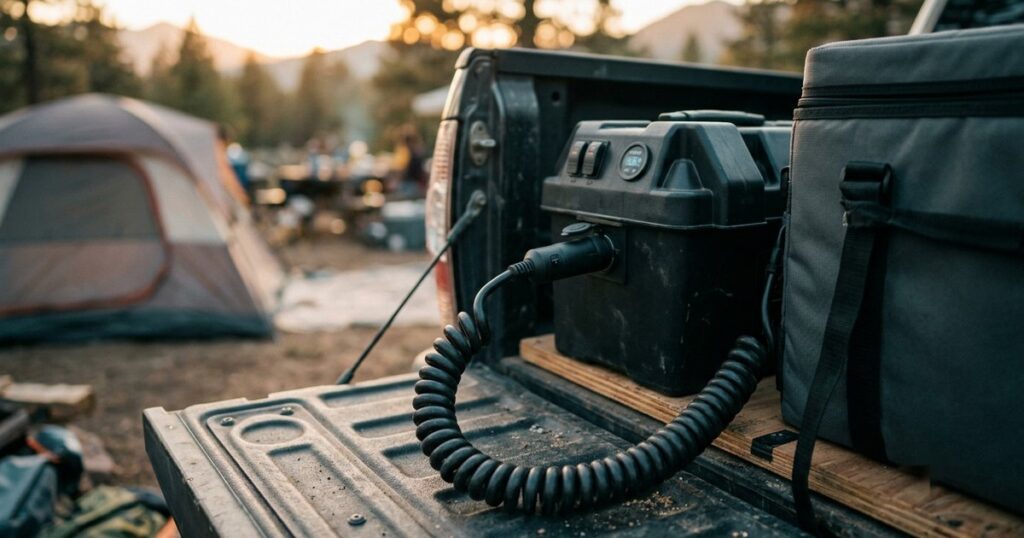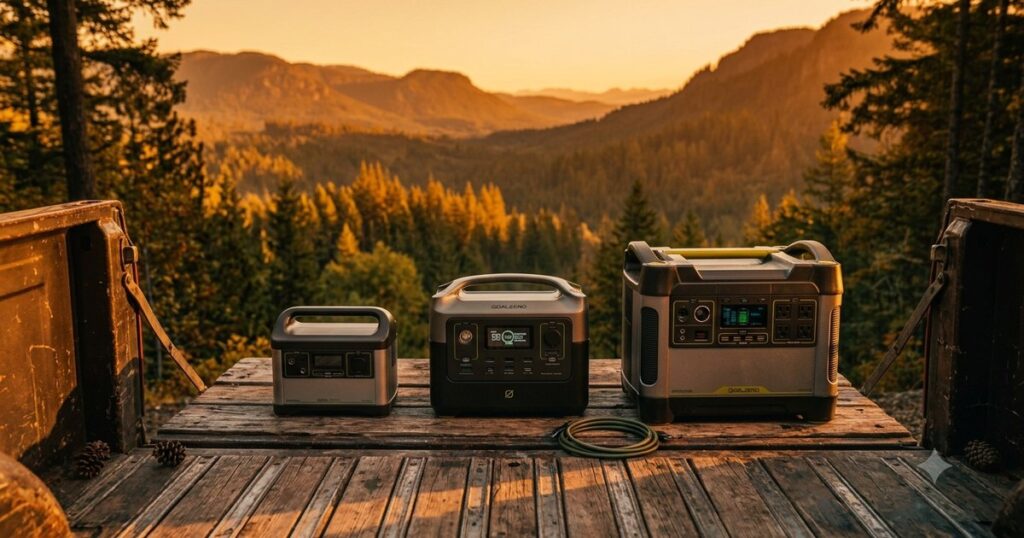
For most car campers, the right power station is a ~1000Wh LiFePO4 unit – big enough to run a 12V fridge and charge everything for a weekend, small enough to carry without swearing. The boxes get marketed on capacity and watts, but for camping the things that actually decide it are usable watt-hours, battery chemistry, a decent 12V output, and how fast you can refill it. Get those right and you’ll buy once.
I haven’t carried these up a trail – I’ve read and watched the people who have, pulled the real capacity tests, and matched them to what car campers actually do. Below: what to look for, five picks from “minimalist” to “a week off-grid,” and who should skip each.
What actually matters (and what doesn’t)
- Usable watt-hours, not rated. You get ~80-90% of the sticker number to your gear. Size it with the sizing math – for most people ~1000Wh is the sweet spot.
- LiFePO4 (LFP) chemistry. ~3000+ charge cycles and far happier in heat than the old NMC packs (~500-800 cycles). For something you keep for years, insist on it. All five picks here are LiFePO4.
- A real 12V DC output. Running a fridge off the DC socket instead of the AC outlet skips the inverter and lasts noticeably longer. A good car socket or DC port matters more for camping than a huge inverter.
- Recharge options and speed. Fast wall charging for the night before you leave, solar input for staying out, and a car cable for topping up on drives. A battery you can’t refill is a one-shot.
- Weight and noise. You’re lifting it in and out of a boot. And the fan: some units are silent at low load, others whine. Campers notice.
- What doesn’t matter much: a 3000W inverter (you’re not running a kettle off-grid if you’re sane), app gimmicks, and the absolute biggest battery you can afford. Buy your number, spend the rest on a solar panel.
| Model | Capacity | Chemistry | Best for |
|---|---|---|---|
| EcoFlow Delta 3 Plus | ~1024Wh | LiFePO4 | The do-it-all weekend pick |
| Anker Solix C1000 | ~1056Wh | LiFePO4 | Buy-once value, quiet |
| Jackery Explorer 1000 v2 | ~1070Wh | LiFePO4 | Simplest, most beginner-friendly |
| Bluetti Elite 200 V2 | ~2073Wh | LiFePO4 | A week off-grid / group trips |
| Anker Solix C300 DC | ~288Wh | LiFePO4 | Minimalist, ultralight, USB+12V only |
Stuck between brands rather than models? EcoFlow, Bluetti, Anker SOLIX and Jackery compared covers what each brand is for, where it is strong, and the catch each one carries.
The picks
EcoFlow Delta 3 Plus
The default for car camping and the one I’d point most people at. Around 1kWh of LiFePO4, very fast AC charging (handy the night before a trip), strong solar input, and enough 12V output to run a fridge the efficient way. It’s the balance of capacity, charge speed and portability that suits a weekend with a fridge and a phone-charging habit. Expandable if you later decide you want more.
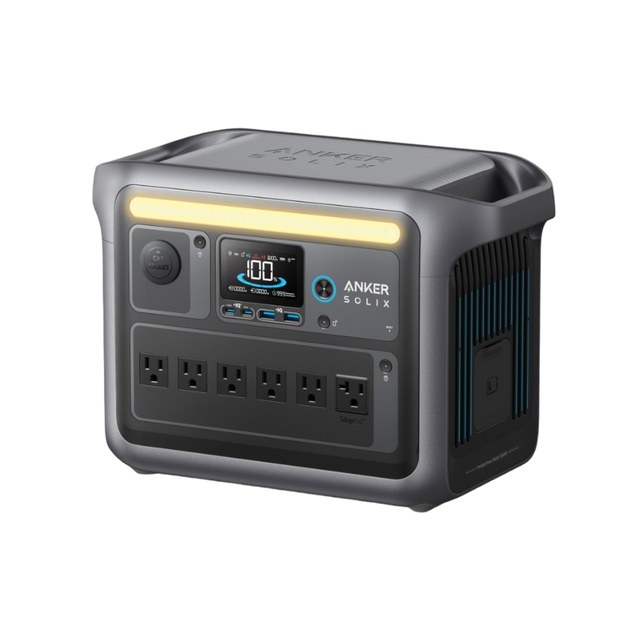
Anker Solix C1000
The value champion the review crowd keeps calling “one and done.” Similar usable capacity to the EcoFlow, LiFePO4, quiet, compact for what it holds, and quick to recharge. If you care more about getting the most dependable ~1kWh for the money than about the last 10% of charge speed, this is the smart buy. Anker’s reputation for not bricking firmware helps too.
Jackery Explorer 1000 v2
The no-fuss pick. If you want to plug it in, not read a manual, and not think about it, Jackery’s the friendliest brand in the category and the Explorer 1000 v2 is light for its capacity. It’ll keep phones, a camera, a drone and lights going for a day with ease. Not the fastest charger or the most expandable, but the easiest to live with for someone who just wants power without a hobby attached.
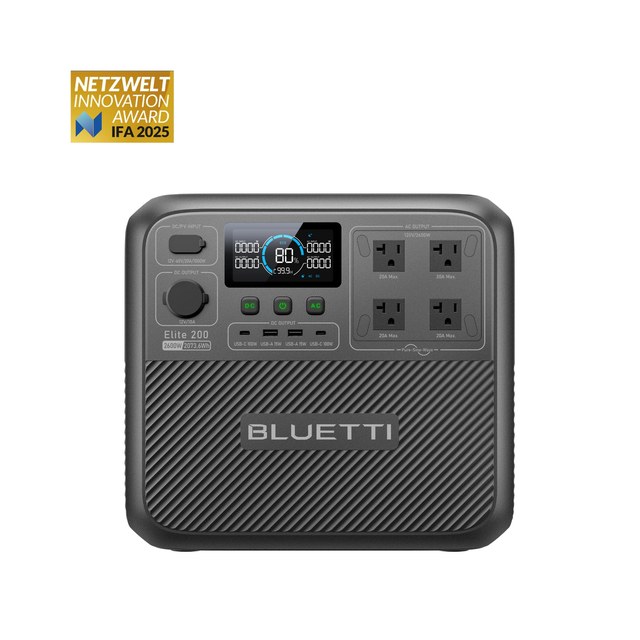
Bluetti Elite 200 V2
When a weekend habit becomes a week, or you’re powering a group. About twice the capacity of the others, still LiFePO4, and Bluetti charges fast from the wall while staying reasonably compact for 2kWh. Heavy – this is a two-hands-and-a-good-back lift – so only size up to it if you genuinely run multi-day off-grid or several people’s gear. For a solo weekend it’s more than you need.
Anker Solix C300 DC
The minimalist’s pick, and a clever one. It drops the AC inverter entirely to stay tiny and light, giving you USB ports and 12V DC only. For a small fridge, phones, lights and a laptop charged over USB-C, that’s all you need – and skipping the inverter means less wasted energy and less weight. Wrong choice if you must run a mains plug; perfect if you’ve gone all-DC and value carrying less.
Will it run a 12V fridge? The math for specific models: Goal Zero Yeti 500, 700 and 1500 · EcoFlow River 3 and River 3 Plus · Anker SOLIX C1000 and C1000 Gen 2 · Bluetti AC70 and AC180 · Jackery Explorer 1000 v2 and 1000 Plus.
See the real capacity testing
Spec sheets lie by omission – the rated watt-hours aren’t what reaches your gear. HOBOTECH is the channel that actually meters it. Here’s his look at the EcoFlow Delta 3 line, the range our top two picks sit in:
What to skip
- NMC-chemistry bargains. A cheaper older unit on NMC cells dies in a few hundred cycles and hates heat. The LiFePO4 premium pays for itself.
- 3000W “power station” monsters for camping. Huge inverters are for running power tools and home backup, not a fridge and some phones. You’re paying weight and money for watts you won’t use.
- The biggest battery you can afford. Past your real daily need, a solar panel is a better buy than more battery – lighter, cheaper, and it never runs out in the sun.
- No-name mega-capacity units. Capacity claims on unknown brands are often optimistic and the BMS/safety is a gamble. Stick to brands the testers actually meter.
Related: what size power station you need · how long it runs a 12V fridge · best 12V fridge for overlanding · how many amps a fridge draws.
The receipts: what I read and watched
- Field testMeters genuine usable Wh and charge speeds across the Delta 3 line.
- Expert reviewBest Portable Power Stations of 2026 (tested) ↗ – GearJunkieIndependent testing across EcoFlow, Anker, Jackery and Bluetti; informs the picks.
- Expert reviewBest Portable Power Stations of 2026, Tested ↗ – Outdoor LifeCalls the Anker Solix C1000 a one-and-done unit – the value pick here.
- Expert reviewThe Best Power Stations of 2026, Lab Tested ↗ – OutdoorGearLabBench-tested rankings and the usable-capacity reality check.
FAQ
What size power station is best for car camping?
Around 1000Wh for most people – enough to run a 12V fridge and charge devices for a weekend, while staying liftable. Going minimalist with no fridge? 300Wh is plenty. Out for a week or powering a group? Step up to ~2000Wh and add solar. Full method in our sizing guide.
Is LiFePO4 worth it for a camping power station?
Yes. LiFePO4 (LFP) lasts roughly 3000+ charge cycles versus a few hundred for older NMC packs, and it tolerates heat far better – which matters in a hot car. Every pick in this guide is LiFePO4 for that reason.
EcoFlow vs Anker vs Jackery vs Bluetti – which brand?
EcoFlow for the fastest charging and all-rounder balance, Anker for the most dependable value, Jackery for plug-and-go simplicity, Bluetti for the most capacity per dollar on bigger units. For a weekend with a fridge, EcoFlow Delta 3 Plus or Anker Solix C1000 are the safe picks.
Can a power station run my 12V fridge all weekend?
A ~1000Wh unit runs a typical fridge for about two days on its own, and a solar panel stretches that to the whole trip. Run the fridge off the 12V DC output, not the AC socket, to get the most hours. See the runtime math.