
If you’ve ever been cold all night despite a good sleeping bag, this is why: your bag is only half the system. The ground draws heat out of you about 25 times faster than still air does, and your body weight squashes the bag’s insulation flat underneath you to nearly nothing. What actually keeps you warm from below is the sleeping pad, and the single number that tells you whether it’s up to the job is its R-value.
Higher R-value means more insulation from the cold ground. The number you need is simple: roughly 1-2 for summer, 3-4.5 for three-season, and 6 or more for winter. Here’s how R-value works, the exact number for your trips (with the adjustments most charts skip), the pads worth buying, and the mistakes that leave people shivering on a warm-rated bag.
What R-value actually is
R-value measures resistance to heat flow – how well the pad stops your body heat draining into the ground. It’s a simple, now-standardised number (most brands test to the same ISO method, so a 4.0 from one maker matches a 4.0 from another). Two useful facts: it’s not tied to thickness (a thin pad can out-insulate a fat one), and it’s additive – stack a foam pad under an air pad and the R-values add together, which is the cheap way to make a summer pad do winter.
The number you need
| Conditions | R-value to aim for | Notes |
|---|---|---|
| Summer / warm nights | 1.0 – 2.0 | Above freezing; insulation barely tested |
| Three-season (most camping) | 3.0 – 4.5 | Spring to autumn; the sweet spot for most people |
| Cold shoulder-season | 4.5 – 6.0 | Near and a bit below freezing |
| Winter / snow (below ~10F) | 6.0+ | Serious cold; go higher for snow camping |
Then adjust for you, because the charts assume an average warm sleeper. Add +0.5 to +1.0 to the R-value if you sleep cold, if you’re a side sleeper (less of you touching the pad, more pressure per point), or – on average – if you’re a woman, since women tend to sleep colder. It’s cheaper to buy half a point more R-value than to spend a night regretting it. When in doubt, round up.
The pad-and-bag system (why a warm bag isn’t enough)
Think of your sleep setup as two halves: the bag handles the air around you, the pad handles the ground beneath you. They only work together. A 0F bag on a summer pad will still leave you cold, because the part of the bag under your body is crushed flat and doing almost nothing – the pad is carrying that whole side. Match the pad’s R-value to the temperature you’re sleeping in, not just the bag’s rating. This is the same principle as keeping a dog warm at camp: insulation from the ground first. In summer the ground is the problem from the other direction, and keeping a dog cool while camping includes a seven-second hand test for exactly that.
The picks
NEMO Tensor All-Season
The best all-rounder, and the pad most campers should buy. An R-value of 5.4 covers spring through autumn and dips comfortably into light winter, yet it’s light enough to backpack (around 14 oz) and thick enough to actually sleep on. Quiet for an air pad, well built, and versatile enough that you won’t need a second pad for most trips. If you buy one pad to do the most nights, this is it.
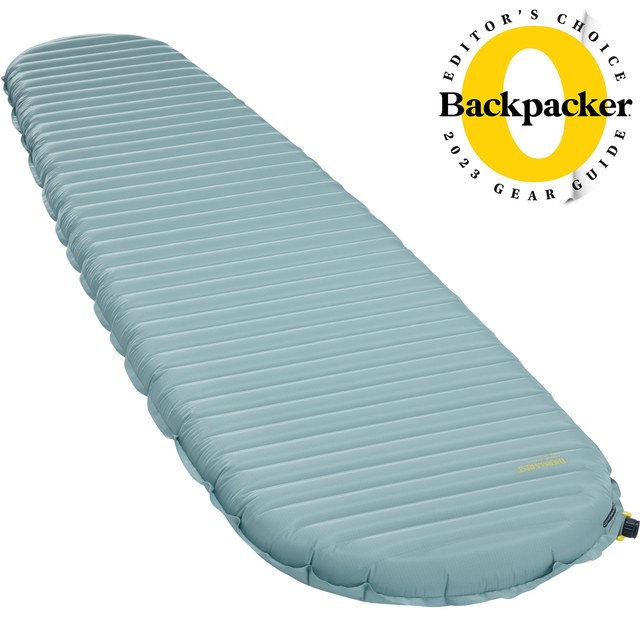
Therm-a-Rest NeoAir XTherm NXT
The winter and serious-backpacker pick. An R-value of 7.3 handles genuine cold and snow, and Therm-a-Rest keeps it impressively light for that much warmth. The benchmark four-season air pad for years, and still the one a lot of experienced winter campers reach for. Get it if your trips run cold or you carry your pad on your back into the snow.
Exped MegaMat 10
The car-camping comfort king. Four inches thick, an R-value of 8.1, and a sleep that’s closer to a real mattress than a camping pad. It’s heavy (around 4.5 lb) and bulky, so it’s strictly for car camping and base camps – but if you’re not carrying it far and you want to sleep like you’re at home in any temperature, nothing in this list beats it. Warm enough for deep winter and plush enough you’ll forget you’re on the ground.
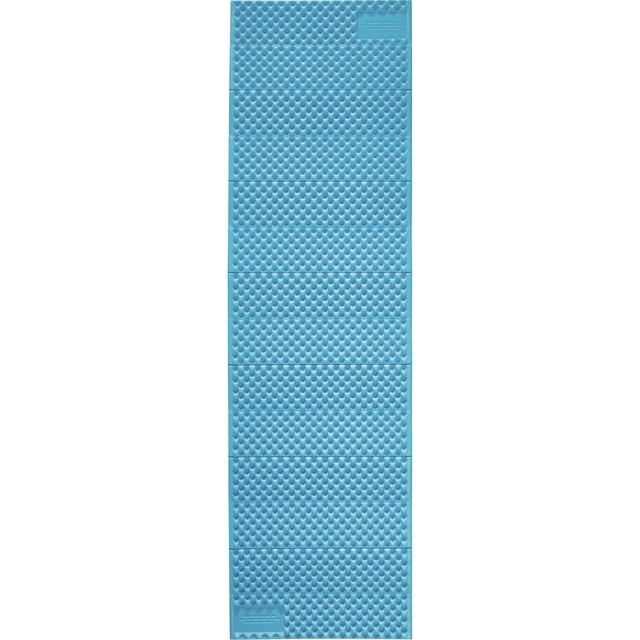
Therm-a-Rest Z Lite closed-cell foam pad
The cheap, indestructible classic – and the smartest second pad you can own. An R-value around 2 isn’t much alone, but it can’t pop, costs little, doubles as a sit pad, and (crucially) stacks: lay it under an air pad and the R-values add, turning a three-season pad into a winter one for next to nothing. Buy one to layer under your main pad for cold trips, or as a bombproof summer pad on its own.
What to look for (beyond R-value)
- R-value to the ISO standard. Brands now test the same way, so the numbers are comparable. Ignore vague ‘all-season’ claims with no R-value – that’s a tell.
- Thickness and comfort. R-value keeps you warm; thickness keeps you comfortable, especially for side sleepers (you want 3 in or more so a hip doesn’t bottom out). They’re separate things – check both.
- Weight vs use. Backpacking wants light (the Tensor, XTherm); car camping can afford plush and heavy (the MegaMat). Don’t carry a 4.5 lb mattress up a trail.
- Noise. Some air pads crinkle like a crisp packet every time you move. Quieter designs (the Tensor) save your tent-mate’s sanity.
- Stacking. A foam pad under an air pad adds R-values and protects against punctures. The cheapest route to winter warmth.
What to skip
- Uninsulated air pads in the cold. A bare air pad (R around 1) is a balloon of cold air under you – fine in summer, miserable below 50F. Check the R-value, not the price.
- Air beds and pool lilos for camping. R-value near zero. They feel comfy in the shop and freeze you at 2am. Not insulation, just a cold cushion.
- Buying on thickness alone. A thick pad isn’t automatically a warm one. A 4-inch uninsulated pad can be colder than a 2-inch insulated one. Read the R-value.
- Ignoring the personal bump. Cold sleepers and side sleepers who buy exactly to the chart often end up cold. Add the half-point. It’s the cheapest insurance in camping.
Related: how to keep your dog warm camping (same ground-insulation idea, for the dog). More core camp gear guides are on the way.
The receipts: what I read and watched
- Expert reviewSleeping Pad R-Value Explained ↗ – Switchback TravelThe season-to-R-value guidance and the personal (cold/side/woman) adjustments used here.
- Hard numbersSleeping Pad R-Values Listing 2026 ↗ – SectionHikerCross-brand R-value figures behind the picks (Tensor 5.4, XTherm 7.3, MegaMat 8.1).
- Expert reviewThe Best Backpacking Sleeping Pads of 2026 ↗ – OutdoorGearLabIndependent testing naming the NEMO Tensor All-Season the best all-around pad.
- Expert reviewBest Backpacking Sleeping Pads (3,000 nights tested) ↗ – CleverHikerLong-term field testing on comfort, warmth and durability across the picks.
FAQ
What R-value sleeping pad do I need?
Roughly R 1-2 for summer, R 3-4.5 for three-season camping (the sweet spot for most people), and R 6+ for winter or snow. Add 0.5-1.0 if you sleep cold, sleep on your side, or tend to feel the cold. When unsure, round up – extra R-value rarely hurts.
Is a higher R-value always better?
Warmer, yes, but higher-R pads often cost and (sometimes) weigh more, and you don’t need winter warmth in July. Buy for the coldest trips you’ll realistically do. If that varies a lot, get a three-season pad and stack a cheap foam pad under it for the cold trips – R-values add.
Can you stack two sleeping pads to add R-value?
Yes – this is the cheap winter trick. Lay a closed-cell foam pad (R about 2) under your air pad and the R-values add together, so a three-season pad becomes a winter one. The foam also protects the air pad from punctures and doubles as a sit pad.
Why am I cold at night even with a good sleeping bag?
Almost always the pad. Your body crushes the bag’s insulation flat underneath you, so the pad does the work of insulating you from the ground – and the ground saps heat far faster than air. A warm bag on a low-R pad still sleeps cold. Match the pad’s R-value to the conditions and the problem usually disappears.