The single most useful thing to know about keeping a dog warm at camp: it’s the ground, not the air. A dog lying on cold earth loses heat into it all night, far faster than it loses heat to the breeze. Get a layer of insulation under your dog and you’ve solved most of the problem before you’ve bought a single coat. Everyone obsesses over the jacket; the testers and the experienced campers all point at the ground.
After that it’s a simple layered system, the same idea as keeping yourself warm. Here’s what actually works, the gear worth owning at each layer, the warning signs your dog is genuinely too cold, and the stuff that’s a waste of money.
Rule one: insulate from the ground
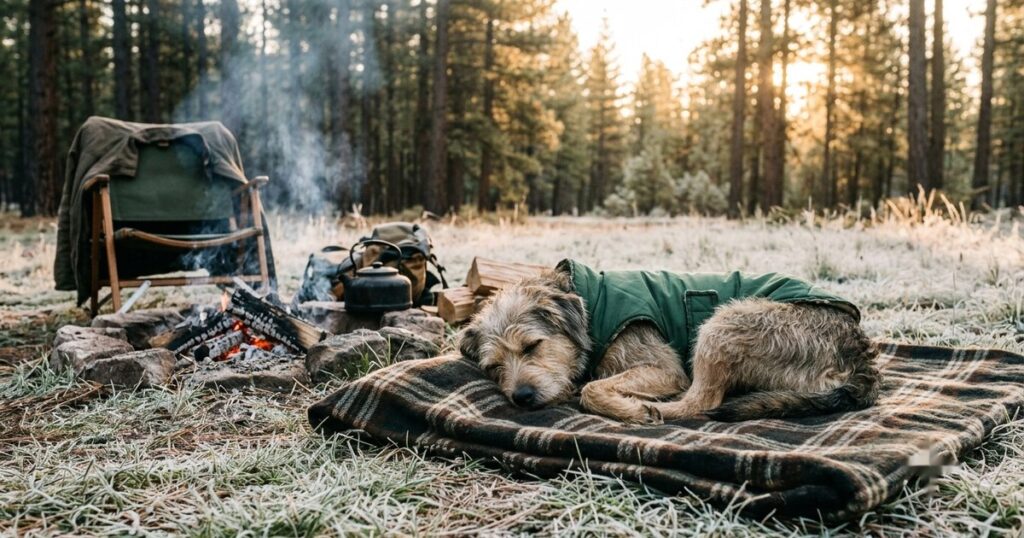
Cold ground is a heat sink. A dog curled on bare earth or a thin tent floor will be cold no matter how furry it is, because the ground draws warmth straight out of its body through contact. Put something insulating underneath – a closed-cell foam pad, an insulated dog bed, or a dog sleeping bag with a padded base – and you break that path. This one move does more than anything else you can buy. If you do nothing else, do this.
The layered system (build it in order)
- 1. Ground insulation (always). Closed-cell foam pad or insulated bed. The non-negotiable base layer.
- 2. A cover or bag (most trips). A dog sleeping bag adds a warm top layer and traps body heat. Many combine the pad and cover in one.
- 3. A jacket (cold nights / cold dogs). A genuinely insulated coat keeps core warmth in, day and night. Essential for short-haired, small, old, or thin dogs; optional for a thick-coated husky type.
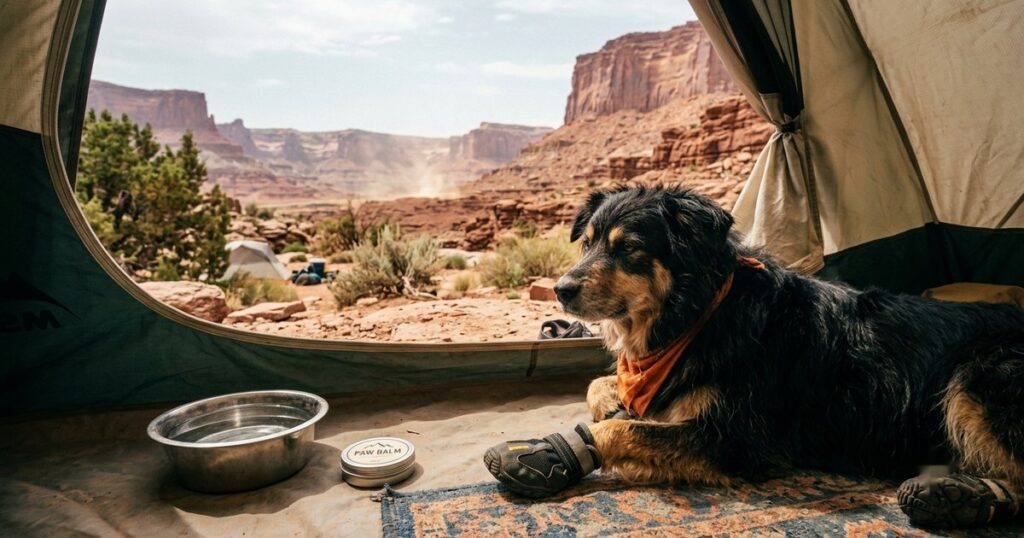
- 4. Booties (ice and snow). Protect paws from frozen, sharp or salted ground and stop ice balling up between the pads. Not about warmth alone – about not shredding their feet.
- 5. The tent (free and effective). A dog sleeping in the tent with you benefits from shared body heat and gets out of the wind. The warmest spot in camp is next to you.
Know your dog (and watch for the signs)
Not every dog needs every layer. A double-coated northern breed is built for cold; a greyhound, a small terrier, a puppy, a senior or any short-haired dog feels it fast and needs more help. Size the kit to the dog in front of you, not the average.
The warning signs your dog is too cold: shivering, whining or restlessness, tucking into a tight ball and refusing to settle, lifting paws off the ground, or going quiet and lethargic. Lethargy and stopping shivering after being very cold is a red flag – warm them up properly (into the tent, into a bag, against you). When in doubt, bring the dog in. No view is worth a cold dog.
| Layer | What it does | When you need it |
|---|---|---|
| Closed-cell pad / insulated bed | Blocks heat loss to the ground | Always – the base layer |
| Dog sleeping bag | Adds a warm cover + padding | Most cold-weather trips |
| Insulated jacket | Keeps core body heat in | Cold nights; short-haired/small/old dogs |
| Insulated booties | Protects paws from ice/snow | Frozen, sharp or salted ground |
| Tent + body heat | Shelter from wind, shared warmth | Every cold night (free) |
The gear worth buying
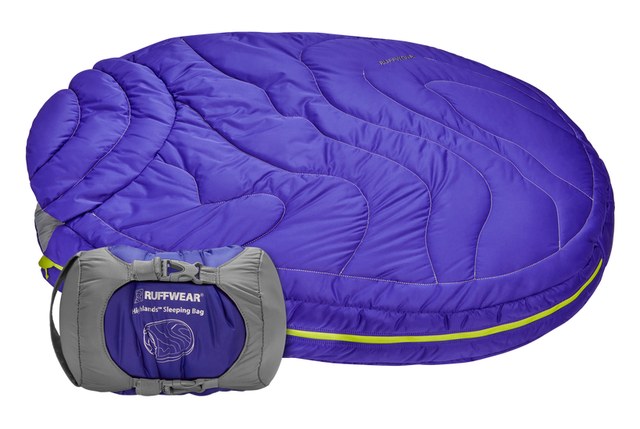
Ruffwear Highlands Dog Sleeping Bag
The best single cold-weather buy, because it covers two layers at once: an insulated, padded base that lifts the dog off the cold ground and a warm half-zip cover. Reviewers rate it comfortable to around 40F; add a fleece liner or a jacket for below freezing. It’s well made (strong zips, contoured shape), packs into its own stuff sack, and isn’t too bulky for car camping. If you buy one thing for a camping dog, this is it.
Hurtta Outdoors Dog Sleeping Bag
The pick for genuinely frigid nights. Designed in Finland for snow country, it uses a round shape that suits how dogs actually curl up, plus a heat-reflective inner lining that works like a space blanket on top of the synthetic insulation. Warmer in real cold than most, and the water-resistant shell shrugs off frost and damp. Get this over the Ruffwear if your trips run below freezing.
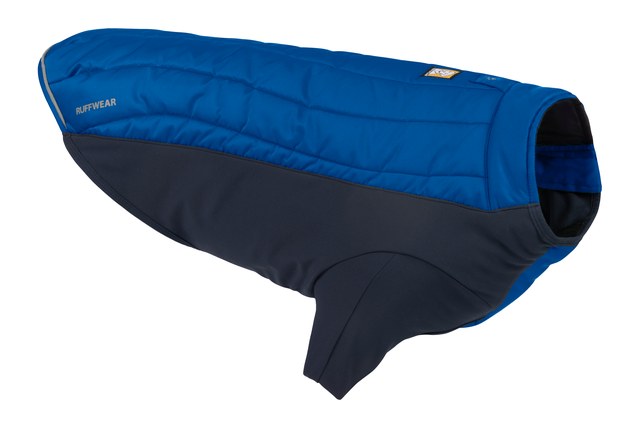
Ruffwear Powder Hound Jacket
About the warmest dog coat going, and the layer that keeps a dog comfortable through a cold day, not just at night. It combines insulation with a stretchy, hard-wearing build that moves with the dog. Overkill for a husky on a mild evening; close to essential for a short-haired or small dog in real cold. Buy it if your dog runs cold or your trips do.
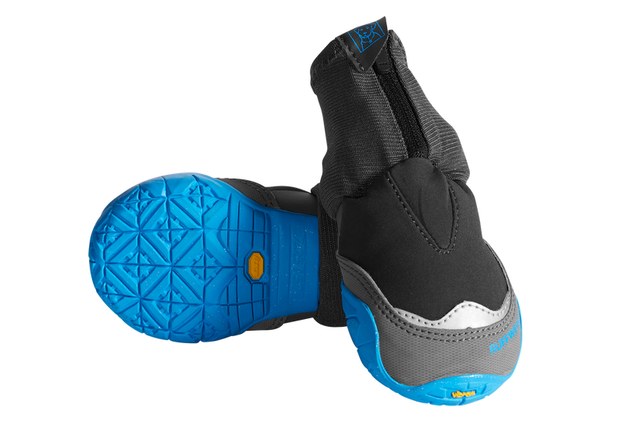
Ruffwear Polar Trex Booties
Paw protection for ice and snow. A Vibram sole gives grip on frozen ground and an insulated softshell upper keeps the worst of the cold and ice out, while stopping snowballs forming between the pads (which is what actually stops a dog in its tracks). Booties take some getting-used-to for the dog, so fit them at home first. Worth it for genuine snow and ice; skip for mild, dry cold.

Closed-cell foam pad / insulated dog bed
The budget version of rule one, and it works. A simple closed-cell foam pad (the same kind humans use under a sleeping mat) or a packable insulated dog bed puts a warm barrier between your dog and the ground for very little money. Less plush than a proper dog bag, but it delivers the part that matters most. Pair it with a blanket the dog already loves and you’ve covered the basics cheaply.
Free things that genuinely help
- Let the dog sleep in the tent. Shared body heat and shelter from wind beat any gear. The warmest place in camp is next to you.
- Burn some energy before bed. A brisk walk or a game of fetch warms the dog up before it settles, the same way it works for you.
- Feed a bit more, high quality. Digesting food generates heat; a slightly bigger dinner in the cold helps fuel the furnace.
- Keep them dry. A wet dog is a cold dog. Towel them off, and keep their bedding out of the damp.
- Hydrate. Cold air dehydrates dogs just like heat does, and a dehydrated dog regulates temperature worse. Offer water through the day.
What to skip
- Cotton or fashion coats. They don’t insulate and they soak up water, which makes a dog colder, not warmer. Buy a coat for warmth, not for looks.
- Leaving the dog on the bare tent floor. The most common mistake. A thin floor over cold ground is barely better than no floor. Insulate underneath.
- Mains-powered heated pads off-grid. A heated bed that needs a wall socket is useless at a dispersed campsite, and running one off a battery all night is a big draw. Passive insulation is the off-grid answer.
- Assuming a furry dog needs nothing. Even double-coated dogs lose heat to cold ground. Every dog wants insulation underneath; only the top layers are breed-dependent.
More for camping with your dog: best GPS dog tracker for off-grid camping (keep them findable as well as warm) · the mirror problem: keeping them cool in summer heat.
The receipts: what I read and watched
- Expert reviewBest Dog Sleeping Bags of 2026 (field-tested) ↗ – Treeline ReviewIndependent field testing of dog sleeping bags incl. the Ruffwear Highlands.
- Expert reviewReal-world comfort rating and build notes behind the top pick.
- Expert reviewComparison incl. Hurtta’s heat-reflective, round-shape design for deep cold.
- Owner reportsEssential winter dog camping gear, per Reddit ↗ – Explore / r/campingOwners consistently rank ground insulation as the single most important thing.
- Expert reviewHow to Keep Your Dog Warm When Camping ↗ – ReserveAmericaThe layered system, tent body-heat and the cold-stress warning signs.
FAQ
How do I keep my dog warm camping in cold weather?
Insulate it from the ground first (a foam pad or a dog sleeping bag with a padded base), then add a cover or bag, a jacket on cold nights, and booties on ice. Let the dog sleep in the tent for shared body heat, feed it a bit more, keep it dry, and watch for shivering.
Do dogs need a sleeping bag for camping?
In cold weather, a dog sleeping bag is the best single buy because it handles both ground insulation and a warm cover in one. In mild weather a closed-cell foam pad and a familiar blanket are enough. The part you can’t skip is something insulating underneath the dog.
How cold is too cold for a dog to camp?
It depends on the dog. Thick double-coated breeds handle freezing fine with good ground insulation; short-haired, small, old or thin dogs struggle well above freezing and need a jacket and a bag. Watch the dog, not just the thermometer – shivering, restlessness, tucking up tight or going lethargic mean it’s too cold, so warm it up and bring it in.
Should my dog sleep in the tent with me?
Yes, in the cold. The tent blocks wind and traps body heat, and your dog sleeping near you is the warmest, safest setup. Put its pad or bag inside with you rather than leaving it out in the elements.