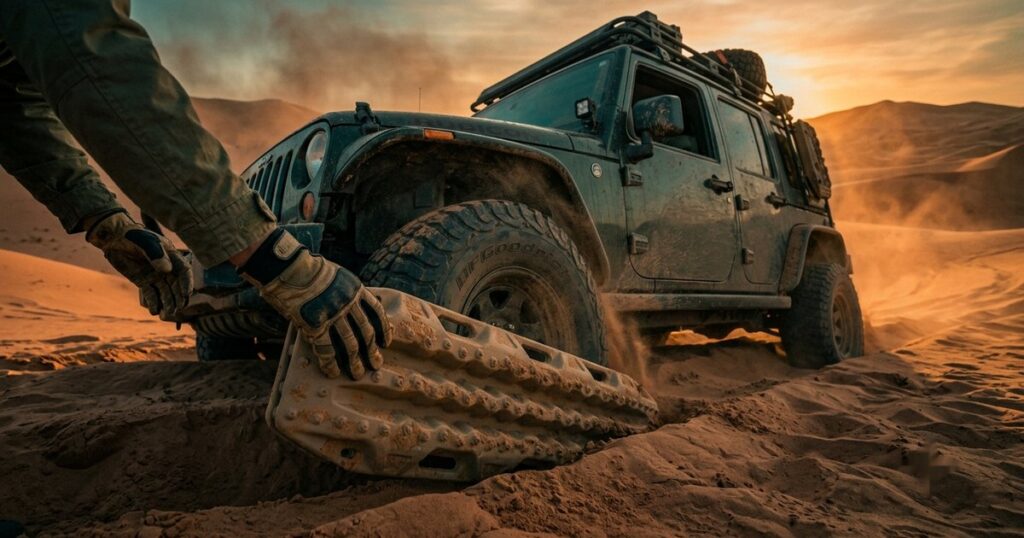
Recovery boards are the one piece of recovery kit that gets you unstuck on your own – no winch, no anchor point, no second vehicle. You wedge them under the spinning tyres in sand, mud or snow, and they give the rubber something to bite. Simple. The only real question is how much to spend, and here’s the honest answer most roundups dance around: the cheap ones work fine until things get genuinely bad – and then only the good ones survive.
So the right buy depends entirely on how stuck you actually plan to get. I haven’t buried a truck to the axles to test these myself – I’ve read the long-term owner threads and the head-to-heads, and the verdict is consistent. Here’s when premium is worth it, when a budget pair is plenty, the technique that keeps you from melting either, and what to skip.
How recovery boards actually get you out
They’re reinforced nylon or composite ramps with rows of teeth on top. Once a tyre is spinning uselessly in soft ground, you clear what you can from in front of the tyre, jam the board under and ahead of it (teeth up), then drive on gently so the tyre climbs the board and grips. In deep sand you air down first; in mud you clear the tread. Done right, it’s a one-person, one-minute job. The magic is self-sufficiency: they work anywhere your vehicle can reach, no kit or helper required.
The honest split: when to spend, when not to
The quality gap is real but narrow until you push it. Testers and owners agree the budget boards handle ordinary stucks fine. The difference shows up under sustained wheel-spin and heavy loads, where cheaper plastic can flex, fade or even melt, while the premium boards keep their shape and their teeth. If a failed board means a long, dangerous walk, that margin is worth paying for. If it means calling a mate, it isn’t.
| Boards | Tier | Holds up when | Best for |
|---|---|---|---|
| MAXTRAX MKII | Premium | It gets genuinely bad | Frequent / solo / serious |
| ActionTrax | Premium (heavy-duty) | Very heavy vehicles | Big rigs, max load rating |
| BUNKER INDUST Gen 7 | Value | Most normal recoveries | ~90% of premium, half the price |
| X-BULL Gen 3.0 | Budget | Occasional, light use | Cheapest sane pair |
The picks
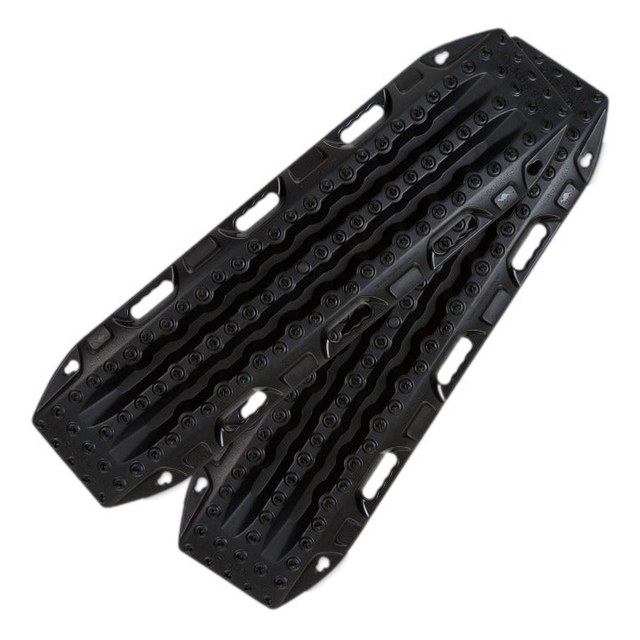
MAXTRAX MKII
The boards everyone else is compared to. Owners report years of hard service, and in the head-to-heads they’re the ones that survive when conditions turn nasty – the cheaper boards are the ones that come back chewed up or melted. They’re not cheap, but spread over the years they last (and the trips they save) the cost looks different. If you wheel often, travel alone, or go somewhere a stuck truck is a real problem, these are the buy.
ActionTrax
The heavy-hauler’s choice. Rated by the maker to a far higher load than anything else here, so they’re the pick for a fully-built rig, a heavy tow vehicle, or anyone who wants the biggest safety margin under serious weight. Premium price, premium capability. Overkill for a light SUV; the right call when there’s a lot of vehicle to lift.
BUNKER INDUST Gen 7th
The value sweet spot, and the pair I’d point most weekend overlanders at. Owners reckon they deliver most of the MAXTRAX capability for roughly half the money – plenty strong for normal sand, mud and snow recoveries. They won’t shrug off the same sustained abuse as the premium boards, but for occasional-to-regular use that’s a fair trade. Get these unless you genuinely live off-road.
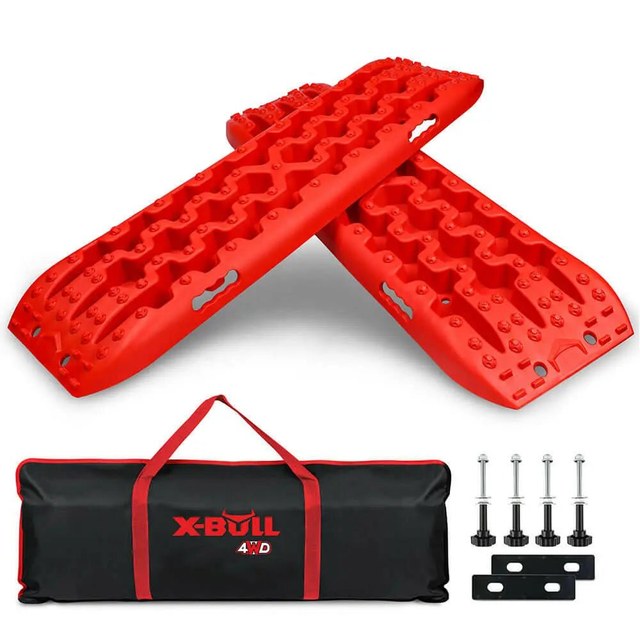
X-BULL Gen 3.0
The cheapest pair worth owning. For an occasional light stuck – a soft campsite, a snowy driveway, a sandy boat ramp – they do the job for very little. Treat them as honest budget gear: drive gently, don’t spin the wheels, and don’t expect them to survive a brutal axle-deep bog. For a casual user who just wants insurance in the boot, they’re enough.
The technique that saves your boards (and your day)
- Don’t spin the wheels. The number-one board killer. Spinning rubber generates heat that melts the teeth flat – on cheap and premium boards alike. Ease onto them gently and let the tyre walk up.
- Air down first in sand. Lower tyre pressure floats you and is often half the recovery on its own. This is where your air compressor earns its place – air down to get out, air back up for the road.
- Clear in front of the tyre. Dig out the sand or mud ahead of the wheel so the board sits flush and the tyre can climb it, not just bulldoze it deeper.
- Mount them where you can reach them. Boards buried under everything in the boot are useless when you’re stuck. Rack or quick-release mounts (with the right pins) keep them to hand – and out of the cabin, because they get filthy.
- Use a leash. Boards can shoot out behind a climbing tyre. A simple leash stops you hunting for a launched board in the dunes.
What to skip
- A single board. Recovery boards come in pairs for a reason – you usually need one under each driven side. One board is half a recovery.
- Premium boards for a mall-crawler. If your idea of off-road is a gravel campground, a budget pair is honest insurance and the MAXTRAX money is better spent elsewhere.
- The no-name, no-brand specials. Below the budget-but-known brands sit boards that snap or melt almost on contact. If it has no reviews and a suspiciously round price, skip it.
- Spinning your way out. Not a product, a habit – and the one that wrecks boards and digs you deeper. Gentle and patient beats throttle every time.
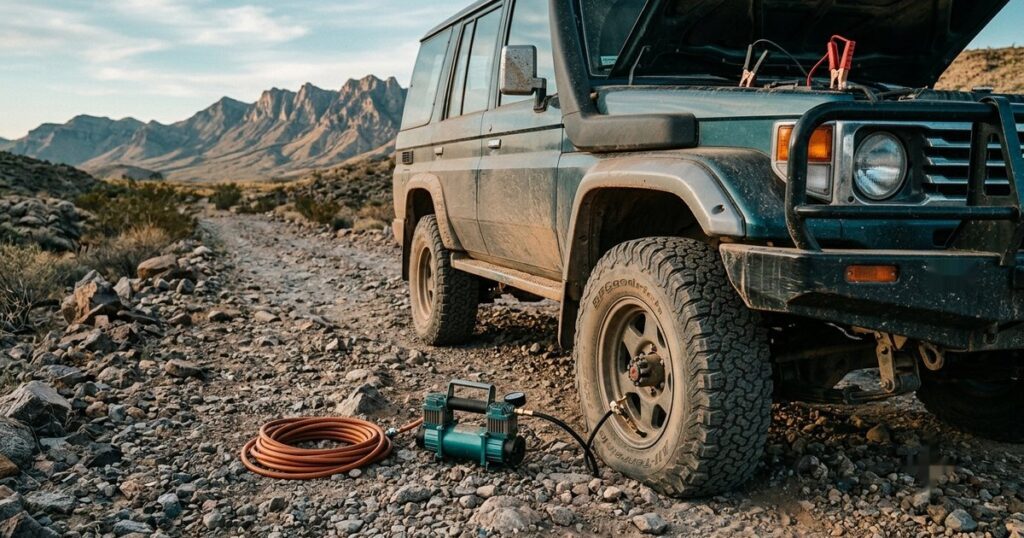
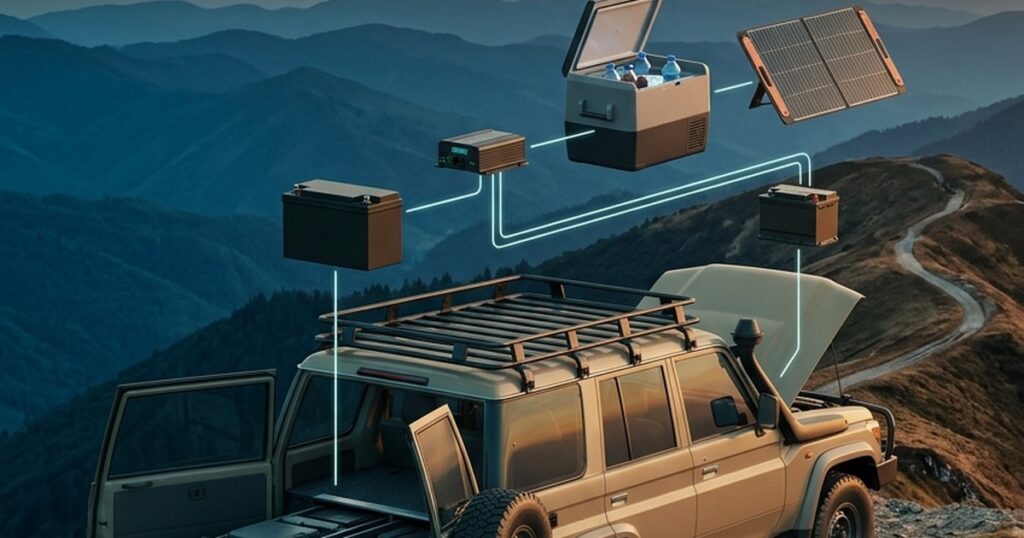
More overlanding kit: best portable air compressor (air down to get out, air up to get home) · keep the camp running with the right power station.
The receipts: what I read and watched
- Expert reviewMAXTRAX MKII Overlanding Recovery Boards review ↗ – Overland ExpoLong-term review behind the MAXTRAX ‘survives the bad ones’ verdict and longevity.
- Expert reviewTraction Board Buyer’s Guide ↗ – 4WDTalkPremium-vs-budget capability split and load-rating guidance used here.
- Owner reportsMaxTrax vs generic recovery board (owner thread) ↗ – Overland Bound communityOwners: cheap boards fine until it gets bad, then only MaxTrax survive – the core honest split.
- Owner reportsTraction board recommendations ↗ – Expedition PortalReal-use recommendations incl. value picks and the don’t-spin-the-wheels technique.
Boards are one item on the list, and not the first one you will reach for. The rest of the kit, sized from the door sticker rather than the curb weight, is in the recovery kit checklist.
FAQ
Are MAXTRAX worth it over cheap recovery boards?
If you go off-road frequently, alone, or somewhere a stuck vehicle is a real problem – yes. MAXTRAX survive sustained abuse and heavy loads that can melt or break budget boards. For occasional, light use close to help, a value pair like the BUNKER INDUST does most of the job for far less. Match the spend to how stuck you’ll actually get.
How do recovery boards work?
They’re toothed ramps you wedge under a spinning tyre in sand, mud or snow to give it grip. Clear ahead of the tyre, set the board under and in front of it, then drive on gently so the tyre climbs and bites. No winch, anchor or second vehicle needed – that self-sufficiency is the whole point.
Why do recovery boards melt?
From spinning the wheels. A tyre spinning on the board’s teeth generates heat that melts them flat, on cheap and premium boards alike. The fix is technique: ease onto the boards gently and let the tyre walk up rather than flooring it. Premium boards tolerate more heat, but none like wheelspin.
How many recovery boards do I need?
A pair – one under each driven side. Most recoveries need both, so boards are sold and used in twos. A single board is only half a recovery, and you’ll wish you had the second one when you’re buried.